TARS Robotics (Shanghai)
TARS
Analyst summary
At a glance
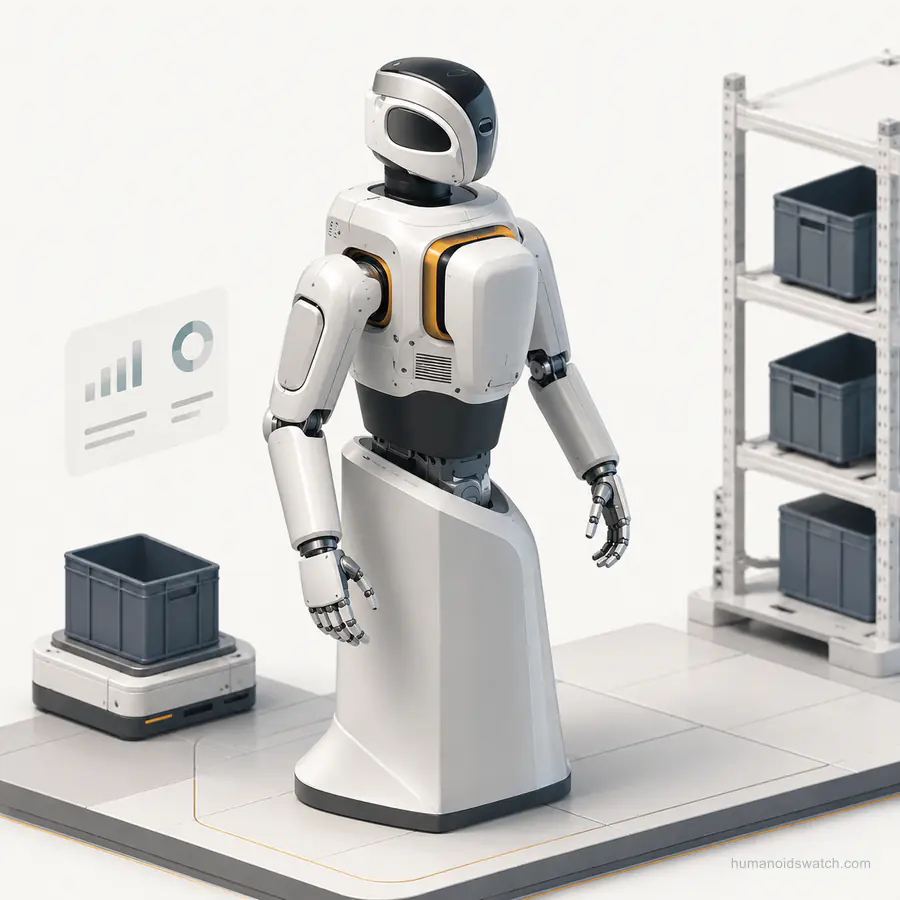
TARS is a full-size bipedal humanoid from TARS Robotics (Shanghai), a 2025-founded embodied intelligence company targeting AI-driven precision manipulation. Public information shows bimanual dexterity at sub-millimeter accuracy, demonstrated via hand embroidery. Deployment evidence is limited to vendor demos, with no named customer sites disclosed.
Evidence signal
Deployments
0 linked deployments
No published deployments are linked to this robot yet.
Profile basics
Specifications
- Robot type
- Full-size bipedal humanoid
- Height
- n/a
- Weight
- n/a
- Payload
- n/a
- Speed
- n/a
- Runtime
- n/a
- Locomotion
- Bipedal
- Manipulation
- Two arms with hands
- Degrees of freedom
- n/a
- Autonomy / control
- n/a
Profile context
Description
TARS is a full-size bipedal humanoid robot developed by Shanghai-based TARS Robotics, a company that emerged in early 2025 with substantial venture backing from Lanchi Ventures and others. The robot is part of a broader embodied intelligence platform built around the vendor's DATA-AI-PHYSICS architecture, which couples real-world operational data capture through a SenseHub system with the AWE 2.0 AI World Engine model. Public demonstrations have centred on ultra-fine bimanual manipulation — most notably hand embroidery, a task requiring sub-millimeter positioning and adaptive force control on flexible materials. The robot is available in T-Series and A-Series variants, both engineered for what the vendor describes as a minimal digital-to-physical gap. TARS sits within a growing cohort of Chinese humanoids and humanoid robots pursuing precision manufacturing use cases, though the company has not yet disclosed production-scale deployment plans or commercial availability timelines.
Public deployment evidence for TARS remains limited to vendor-produced demonstrations and a single press release detailing the hand embroidery showcase. The demonstrated capabilities — ultra-fine bimanual manipulation of flexible materials — address a genuine automation gap in wire harness assembly and small-component manufacturing, where human dexterity has historically been hard to replicate. However, the gap between a controlled demo and repeatable production-floor operation is substantial, and TARS has not yet provided third-party operating evidence, site-level integration data, or procurement pathways. Buyer assessment should treat this as a pre-commercial humanoid platform with promising manipulation but no confirmed field deployment record.
TARS may be most relevant for buyers in flexible manufacturing sectors where high-mix, low-volume production demands fine manipulation skills that conventional industrial robots cannot economically handle. The demonstrated emphasis on bimanual dexterity, thread-level precision, and adaptive force control suggests potential fit in electronics assembly, wire harness production, textile handling, and quality-inspection workflows involving delicate components. The bipedal form factor and full-size humanoid design imply an ambition toward general-purpose deployment, but practical near-term fit is likely strongest in structured workcells where the manipulation advantage can be leveraged independently of mobility demands.