Siasun Robot & Automation
Songxing
Analyst summary
At a glance
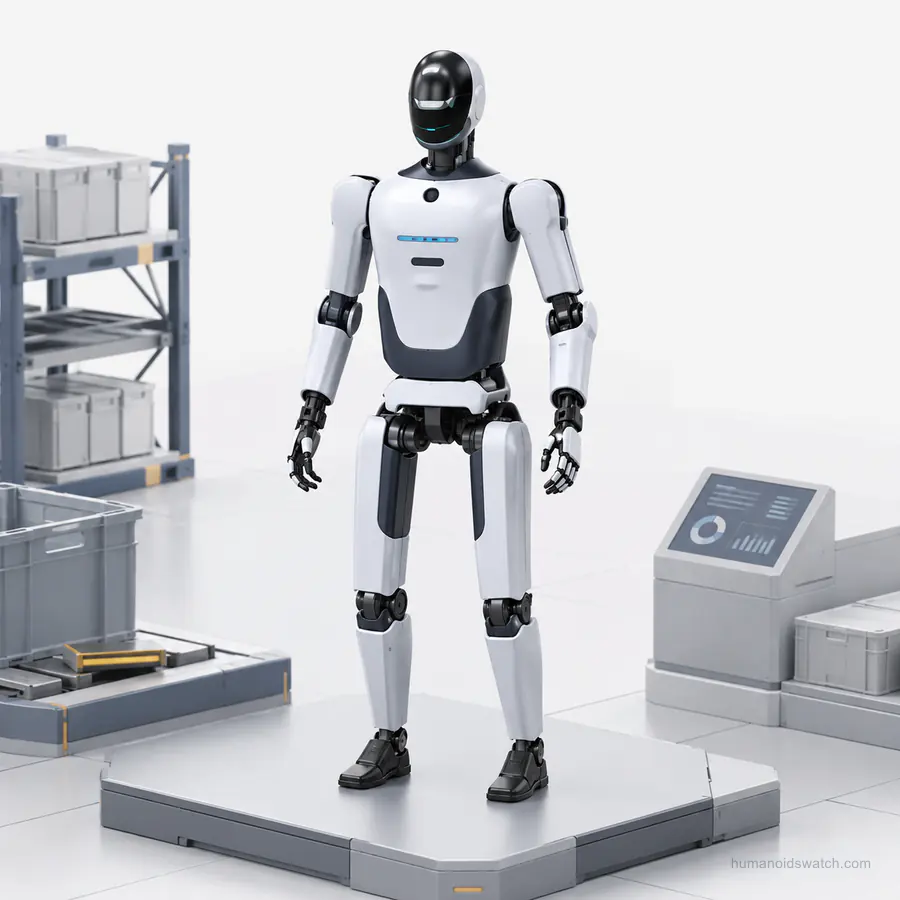
Songxing is a full-size bipedal humanoid robot from Siasun Robot & Automation, positioned for light industrial and logistics use. The 38-DoF design features dual-arm manipulation and 3.0 m/s walking speed, though autonomy and runtime remain undisclosed. Songxing has been shown at industry events but lacks publicly confirmed customer deployments.
Evidence signal
Deployments
0 linked deployments
No published deployments are linked to this robot yet.
Profile basics
Specifications
- Robot type
- Full-size bipedal humanoid
- Height
- 1.65 m
- Weight
- 85 kg
- Payload
- 12 kg
- Speed
- 3.0 m/s
- Runtime
- n/a
- Locomotion
- Bipedal
- Manipulation
- Two arms, end effectors not disclosed
- Degrees of freedom
- 38 DoF
- Autonomy / control
- n/a
Profile context
Description
Songxing is a full-size bipedal humanoid robot developed by Siasun Robot & Automation, one of China's largest industrial robotics manufacturers with deep roots in factory automation, AGVs, and robotic arms under the Chinese Academy of Sciences. The robot was publicly revealed at the 2025 World Robot Conference in Beijing, where Siasun positioned it as an entry into the emerging general-purpose humanoid robotics market. With 38 degrees of freedom, a height of 1.65 meters, and a reported walking speed of 3.0 meters per second, Songxing enters a competitive field alongside other Chinese humanoid robots. Its 12-kilogram payload suggests a design focus on light industrial tasks rather than heavy material handling. Public technical detail remains limited, and Siasun has disclosed relatively little about the robot's sensor suite, control architecture, or autonomy capabilities beyond the core form-factor specifications.
Public deployment evidence for Songxing remains limited. The robot was shown as a demonstration platform at the Beijing World Robot Conference in 2025 by Siasun Robot & Automation, but no named customer deployments, pilot programs, or commercial contracts have been publicly disclosed. The vendor's established presence in Chinese industrial automation provides some institutional credibility, yet the gap between a conference demonstration and repeatable field deployment is significant. The absence of disclosed autonomy specifications and runtime figures further complicates buyer assessment. At this stage, Songxing appears to be a pre-commercial platform in early-stage validation, and buyers should treat available third-party specifications with caution. The public record is stronger on technical positioning and vendor reputation than on operating evidence or deployment maturity.
Songxing may be most relevant for light industrial and logistics environments where bipedal mobility offers advantages over wheeled platforms, such as multi-level facilities or unstructured workspaces. The 12-kilogram payload aligns with tasks like small-part picking, inspection rounds, or tool transport rather than heavy lifting. With a reported third-party price estimate of approximately $140,000 — unconfirmed by Siasun Robot & Automation — procurement clarity remains low. Buyers evaluating Songxing should consider the vendor's broader automation integration capabilities as a potential advantage, particularly for factories already operating Siasun equipment. However, the absence of published autonomy capabilities and runtime data means practical assessment depends heavily on direct vendor engagement and field validation. Fit is likely strongest where a buyer already has an established vendor relationship and can participate in early-stage evaluation.