Robbyant (Ant Lingbo Technology)
Robbyant R1
Analyst summary
At a glance
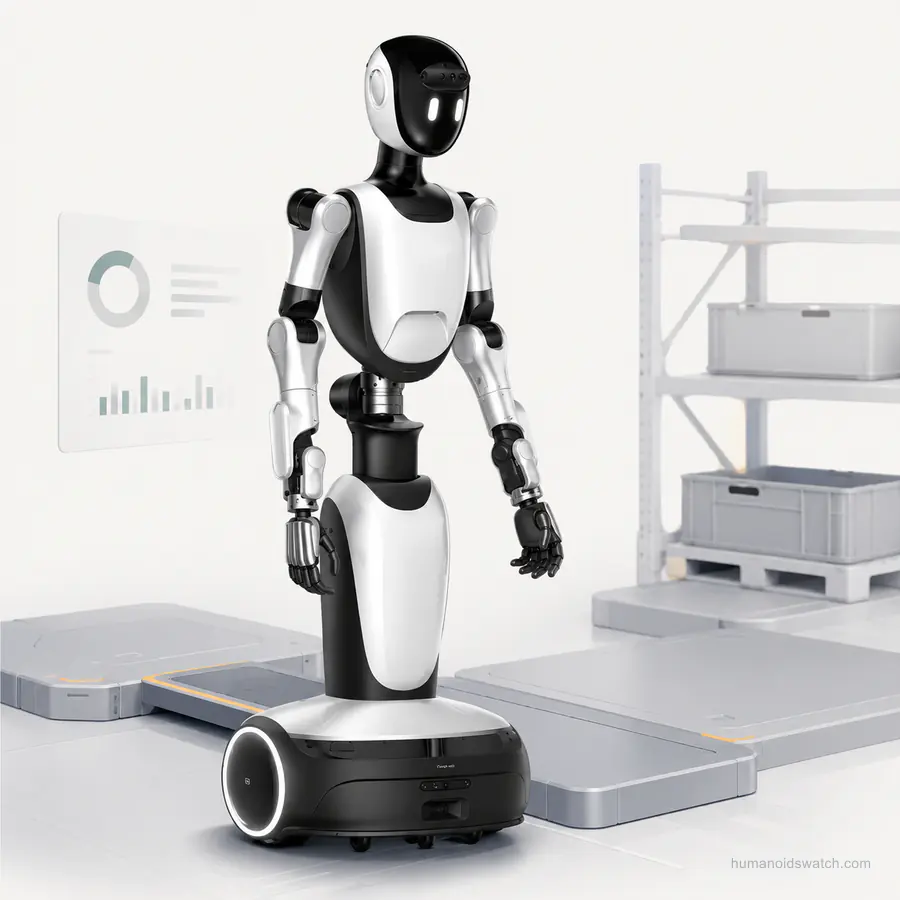
Robbyant R1 is a wheeled humanoid robot from Robbyant (Ant Lingbo Technology), the robotics arm of Ant Group. For institutional service, it targets hospitality, kitchen, museum, and healthcare via bundled solutions. Public demos show autonomous cooking and tour-guide work. Mass production is claimed but named deployments remain limited.
Evidence signal
Deployments
0 linked deployments
No published deployments are linked to this robot yet.
Profile basics
Specifications
- Robot type
- Wheeled humanoid
- Height
- 1.60 m–1.75 m
- Weight
- 110 kg
- Payload
- n/a
- Speed
- < 1.5 m/s
- Runtime
- n/a
- Locomotion
- Wheeled
- Manipulation
- Two arms, end effectors not disclosed
- Degrees of freedom
- 34 DoF
- Autonomy / control
- n/a
Profile context
Description
Robbyant R1 is a wheeled humanoid robot developed by Robbyant (Ant Lingbo Technology), a robotics unit of Ant Group, the Chinese fintech giant behind Alipay. Unveiled in September 2025 at the INCLUSION Conference in Shanghai and IFA Berlin, it marks Ant Group's entry into the humanoid robotics segment. The R1 uses a wheeled base for stable navigation and a dual-arm upper body with 34 degrees of freedom, standing 1.60 to 1.75 meters tall and weighing 110 kg. Its AI draws on Ant Group's Ling series large language models for multimodal perception, task planning, and adaptive learning. Public demonstrations have shown autonomous cooking of dishes like garlic shrimp, with ingredient selection, wok operation, and cleanup. The vendor emphasizes scenario-based solutions, bundling the R1 with customized software for institutional environments. Pricing is estimated around $55,000 by third-party sources but not vendor-confirmed.
Public deployment evidence for Robbyant R1 is modest and concentrated around vendor-led pilots. At the September 2025 launch, company staff stated the robot was in mass production and had shipped to clients including the Shanghai History Museum for tour-guide functions. Additional pilots have been reported in restaurant kitchens, community centers, and healthcare settings for medicine sorting and basic consultations. Ant Group has signaled European partnership exploration, and a second-generation model is under development. However, the public record remains stronger on technical demonstration than on independently confirmed field deployment. No named commercial customers with documented operating histories have been disclosed. The vendor's framing of the R1 as part of broader scenario solutions makes it difficult to isolate adoption metrics. Buyers should distinguish between mass-production claims and the still-limited body of third-party deployment evidence.
Robbyant R1 appears best suited to structured indoor environments where wheeled navigation and general-purpose manipulation are required. The wheeled base removes the stability challenges of bipedal walking, which may appeal to buyers prioritizing reliable uptime in kitchens, hospitality venues, museums, and healthcare. The 110 kg weight and speed under 1.5 m/s position it as a deliberate-paced assistant rather than a high-throughput tool. Practical assessment depends on several unknowns: runtime per charge and end-effector specifications are not publicly disclosed, and the scenario-solution bundling may add integration complexity or vendor lock-in. At an estimated $55,000, the R1 sits in the middle range of current humanoid robot pricing, but procurement clarity is limited since pricing is not vendor-confirmed. Buyers should evaluate whether the bundled model, dependence on Ant Group's cloud AI, and the robot's narrow deployment track record align with their requirements.