Pollen Robotics
Reachy 2
Analyst summary
At a glance
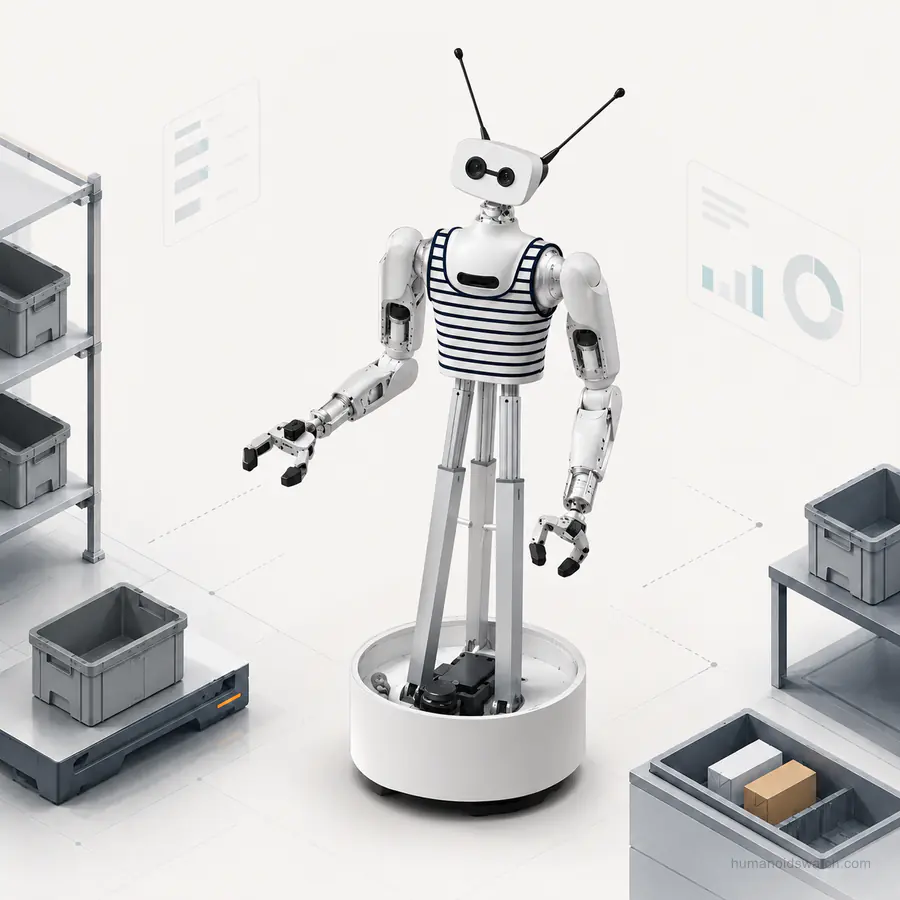
Reachy 2 is a wheeled humanoid robot from Pollen Robotics, built for research, education, and light manipulation. It pairs dual 7-DoF arms and 3 kg payload per arm with an omniwheel mobile base. Development is accessible via Python and modular hardware. Deployment evidence remains in academic settings, with no confirmed commercial rollout.
Evidence signal
Deployments
0 linked deployments
No published deployments are linked to this robot yet.
Profile basics
Specifications
- Robot type
- Full-size bipedal humanoid
- Height
- n/a
- Weight
- n/a
- Payload
- 3 kg per arm
- Speed
- n/a
- Runtime
- n/a
- Locomotion
- Wheeled
- Manipulation
- Two arms, end effectors not disclosed
- Degrees of freedom
- 7 DoF per arm
- Autonomy / control
- n/a
Profile context
Description
Reachy 2 by Pollen Robotics is a wheeled humanoid robot designed primarily for research labs, universities, and AI development teams. Unlike full-sized bipedal humanoid robots aimed at factory floors, Reachy 2 takes a different path: an upper-body platform with two 7-DoF arms, each lifting up to 3 kg, mounted on a stationary or omniwheel base. The robot runs on an open Python software stack and emphasizes modularity, allowing users to swap end effectors and sensors. Pollen Robotics, based in France, positions Reachy 2 as an accessible platform for manipulation research and human-robot interaction. Among humanoids, it occupies a distinct niche — closer to a collaborative research instrument than to a production-floor unit. The design trades walking mobility for precision and lower mechanical complexity, suiting controlled indoor environments while limiting scenarios that require full-body locomotion.
Public deployment evidence for Reachy 2 remains centered on research institutions, academic labs, and developer communities rather than industrial end-users. Pollen Robotics has not disclosed named commercial customers operating Reachy 2 in production manufacturing, logistics, or service environments. The platform's visibility comes largely from conference demonstrations, university partnerships, and open-source community projects — all of which suggest strong technical engagement but limited buyer-visible deployment maturity. Compared to bipedal humanoid robots targeting warehouse and factory automation, Reachy 2 has a narrower deployment story that reflects its research-platform positioning. Buyers evaluating it for operational use should distinguish between its proven utility as a manipulation research tool and the absence of publicly confirmed field deployments. The robot may be closer to a pre-commercial research instrument than to a deployable industrial automation asset at this stage.
Reachy 2 appears better suited to laboratories, academic research groups, and AI development teams than to high-throughput industrial environments. Its 3 kg payload per arm and omniwheel base make it practical for light manipulation tasks — pick-and-place experiments, teleoperation research, and human-robot interaction studies — but constrain it for heavy parts handling or locomotion-intensive workflows. Buyers should evaluate whether a wheeled humanoid torso with strong programmability fits their automation needs, or whether a more rugged industrial manipulator or a bipedal platform is required. Practical fit is likely strongest where repeatable, precise arm movements in a controlled indoor setting matter more than mobility, payload capacity, or around-the-clock production reliability.