PHYBOT
PHYBOT C1
Analyst summary
At a glance
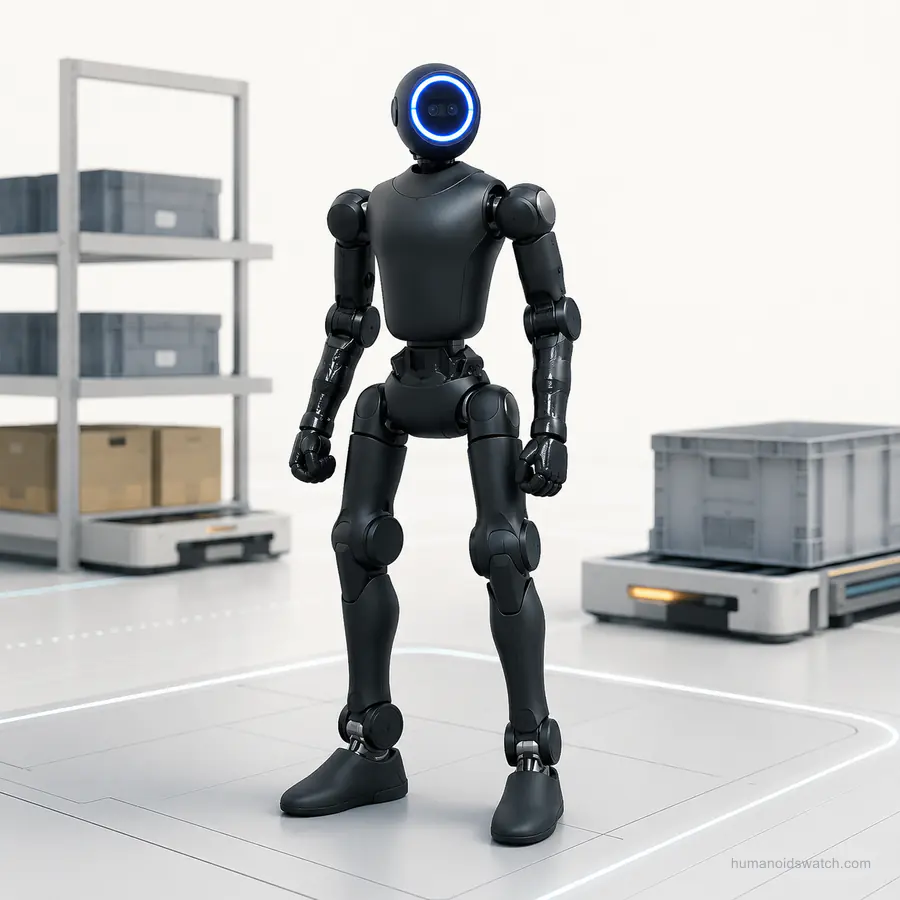
PHYBOT C1 is a compact bipedal humanoid robot from Beijing-based PHYBOT, positioned as an AI-powered companion rather than an industrial platform. At 128 cm and 28 kg, it appeared alongside PHYBOT's M1 research robot at WRC 2025. No named customer deployments, commercial terms, or commercial availability have been disclosed.
Evidence signal
Deployments
0 linked deployments
No published deployments are linked to this robot yet.
Profile basics
Specifications
- Robot type
- Full-size bipedal humanoid
- Height
- 1.28 m
- Weight
- 28 kg
- Payload
- n/a
- Speed
- n/a
- Runtime
- n/a
- Locomotion
- Bipedal
- Manipulation
- n/a
- Degrees of freedom
- 25 DoF
- Autonomy / control
- n/a
Profile context
Description
PHYBOT C1 is a small-form-factor bipedal humanoid robot developed by Beijing Phybot Technology Co., Ltd., a Chinese startup founded in September 2024 by Tsinghua University engineering alumni. The C1 stands 128 cm tall and weighs 28 kg, with 25 degrees of freedom, making it considerably smaller and lighter than most full-size humanoid robots. It was publicly shown alongside the company's flagship M1 research robot at the World Robot Conference 2025 in Beijing. While the M1 is positioned as a high-performance research and development platform, the C1 is marketed specifically as an AI-powered companion robot. PHYBOT describes both models as part of an AI-native robotics approach, but published technical detail on the C1 remains thin. The vendor's public-facing materials focus far more on the M1 than the C1, leaving the smaller model's capabilities and roadmap less defined in the public record.
Public deployment evidence for PHYBOT C1 is effectively absent. The robot has appeared at one known trade event — WRC 2025 — but no named customer deployments, pilot programs, field trials, or commercial orders have been disclosed. PHYBOT's public positioning of the C1 as a companion humanoid robot places it in a category that, across the broader humanoids market, has yet to demonstrate repeatable real-world operating use or customer adoption at any scale. Companion humanoid robots remain a concept-stage segment with no established buyer ecosystem, procurement pathways, or deployment track record. PHYBOT itself is a young startup, founded in late 2024, and its go-to-market efforts appear centered on the M1 research platform. Buyers evaluating the C1 should treat it as a pre-commercial concept with no verified field deployment history.
From a buyer perspective, the PHYBOT C1 occupies an unusual position in the humanoid robots landscape. At 128 cm and 28 kg, its form factor suggests suitability for human-interactive and social environments rather than industrial automation, logistics, or manufacturing. The companion-robot framing implies intended use cases in consumer engagement, education, or assistive contexts, but these remain aspirational without published operational metrics, autonomy posture, or integration detail. Key buyer-relevant specifications — including runtime, payload capacity, manipulation capabilities, and autonomy level — are not publicly available. Practical assessment is therefore constrained to what the form factor and positioning imply: a lightweight, socially-oriented humanoid that may fit experimental or research programs in human-robot interaction, but that lacks the procurement clarity, operating evidence, and ecosystem maturity required for serious commercial evaluation.