1X Technologies
NEO
Analyst summary
At a glance
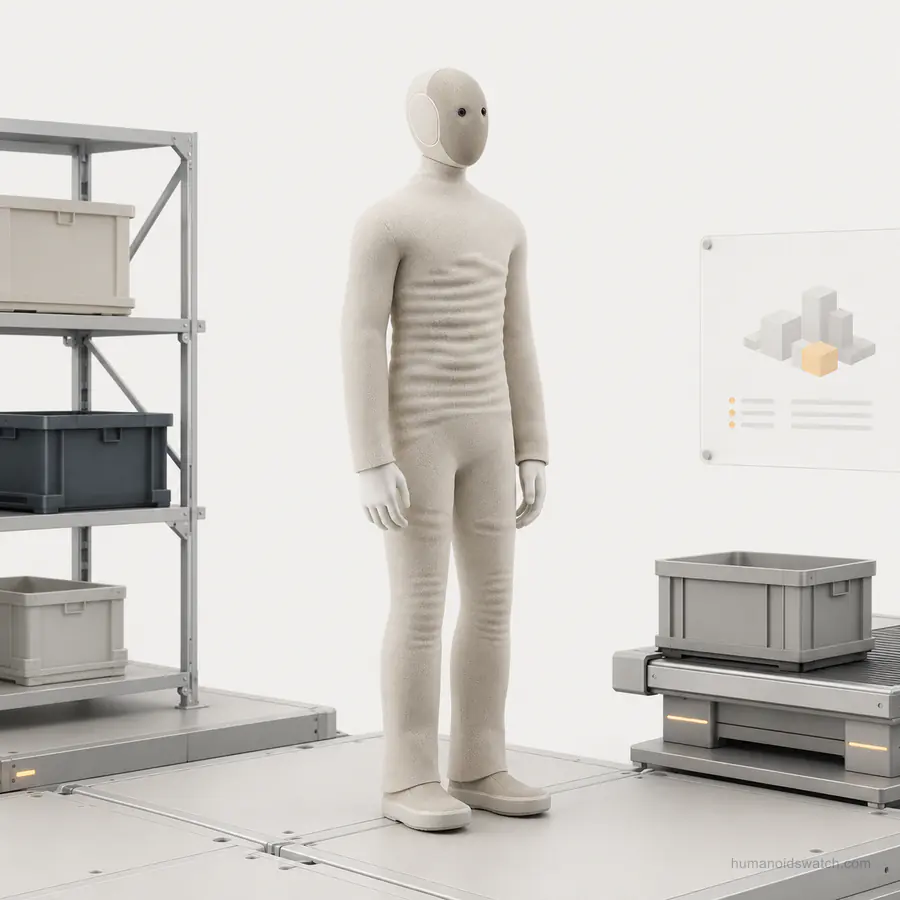
NEO is a bipedal humanoid robot from 1X Technologies, positioned for home and light-commercial use. Its lightweight 30 kg soft-touch design targets assisted-autonomy tasks in human-adjacent settings. Public information shows an early-access program and subscription pricing, but named customer deployments are not clearly disclosed.
Evidence signal
Deployments
0 linked deployments
No published deployments are linked to this robot yet.
Profile basics
Specifications
- Robot type
- Full-size bipedal humanoid
- Height
- 1.68 m
- Weight
- 30 kg
- Payload
- 20 kg
- Speed
- 1.4 m/s
- Runtime
- 4 h
- Locomotion
- Bipedal
- Manipulation
- Two arms with hands
- Degrees of freedom
- 22 DoF
- Autonomy / control
- Semi-autonomous / assisted autonomy
Profile context
Description
NEO is a 1.68-meter bipedal humanoid developed by 1X Technologies, a Norwegian-American robotics company with backing from OpenAI and Tiger Global. Unlike most humanoid robots that target factory and warehouse environments, NEO is designed with a consumer and light-commercial focus, featuring a soft, fabric-covered exterior and tendon-driven actuation that prioritizes safety in human-adjacent settings. The robot weighs approximately 30 kg, carries up to 20 kg, and walks at 1.4 m/s with 22 degrees of freedom across its arms and hands. Its semi-autonomous control architecture relies on assisted autonomy rather than full independence, with an operator-in-the-loop model that reflects 1X's staged approach to capability development. NEO sits within a broader wave of humanoids moving from pure R&D toward pre-commercial availability, though it remains distinct in targeting households and small-scale operations rather than logistics or manufacturing floors.
1X Technologies has shown NEO in controlled demonstrations and concept footage emphasizing domestic tasks such as tidying, carrying objects, and interacting safely with people. The company has opened an early-access reservation program and published subscription pricing of $499 per month alongside a $20,000 purchase option, signaling intent to move toward consumer availability. However, public deployment evidence remains limited: there are no clearly disclosed named customer deployments, no confirmed production-scale rollout, and no independently verified field operating data. The public record is stronger on design philosophy, safety engineering, and fundraising momentum than on demonstrated operating maturity in real buyer environments. Buyers and analysts should assess whether NEO has moved beyond curated demonstration into repeatable, unsupervised use — a gap that applies broadly across the current humanoid robots market but is particularly acute for a consumer-oriented platform.
NEO's practical fit is shaped by its unusual positioning at the intersection of consumer robotics and humanoid form factors. The lightweight build, soft exterior, and assisted-autonomy approach make it better suited to domestic assistance, elder care support, light retail tasks, and research settings than to heavy industrial workflows. Buyers evaluating NEO should consider that its 20 kg payload and 4-hour runtime place it in a different capability class than heavier industrial humanoids, while its pricing — particularly the subscription model — lowers the initial procurement barrier compared to most competitors. Fit is likely strongest where safety-sensitive human proximity, moderate payload needs, and staged autonomy acceptance align. Organizations exploring humanoids for service roles, hospitality pilots, or assisted-living concepts may find NEO's design philosophy relevant, though procurement clarity depends on whether the early-access program matures into general availability with verifiable support infrastructure.