Spirit AI
Moz1
Analyst summary
At a glance
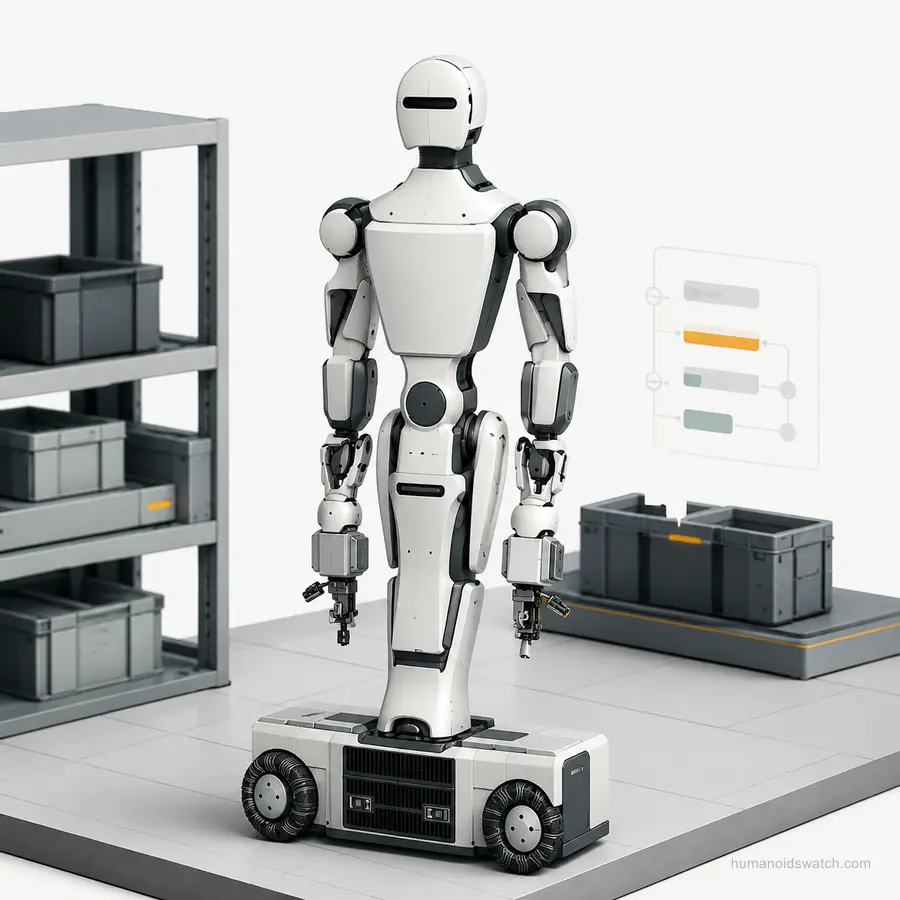
Moz1 is a full-size bipedal humanoid robot from Spirit AI, positioned for service and domestic task execution. It integrates a VLA model with 26 degrees of freedom and force-controlled actuation. Public demonstrations show fine manipulation, but named customer deployments and pricing remain undisclosed.
Evidence signal
Deployments
0 linked deployments
No published deployments are linked to this robot yet.
Profile basics
Specifications
- Robot type
- Full-size bipedal humanoid
- Height
- n/a
- Weight
- n/a
- Payload
- n/a
- Speed
- n/a
- Runtime
- n/a
- Locomotion
- Bipedal
- Manipulation
- Two arms with hands
- Degrees of freedom
- 26 DoF
- Autonomy / control
- Task-level autonomy
Profile context
Description
Moz1 is Spirit AI's flagship humanoid robot, launched in 2025 as a full-size bipedal platform with 26 degrees of freedom and biomimetic force-controlled actuation. The robot operates on a proprietary VLA model, Spirit v1, which fuses vision, language, and action reasoning for multi-step task execution. Public demonstrations have shown Moz1 folding laundry, sorting office supplies, and interacting through natural-language commands. With substantial venture funding reported in the hundreds of millions of dollars, Spirit AI positions Moz1 as a direct competitor to other general-purpose humanoid robots, including the more prominent platforms in the humanoids space. Its multimodal sensor suite supports perception, learning, and adaptation in unstructured indoor environments, a requirement shared by many next-generation robots in this category. However, detailed technical specifications including height, weight, payload, speed, and runtime have not been published, and the robot's commercial availability remains unclear.
Public deployment evidence for Moz1 remains limited. Spirit AI has shared demonstration videos showing the robot executing household and office tasks, but no named customer deployments, pilot programs, or commercial rollouts have been confirmed. The public record is currently stronger on technical positioning and fundraising narrative than on field deployment maturity. Vendor press materials emphasize the robot's force-control architecture and VLA-based autonomy, framing Moz1 as a platform for embodied AI research and eventual service deployment. Buyers evaluating Moz1 should note that the gap between controlled demonstrations and repeatable operating use in production environments has not yet been publicly bridged. Procurement timelines, integration requirements, and service-level guarantees are not available.
Moz1 may be most relevant for R&D teams, AI labs, and automation integrators exploring force-controlled humanoid manipulation in unstructured indoor settings. The robot's VLA architecture and multimodal sensing suggest potential fit for task-flexible environments where natural-language instruction following and adaptive object handling matter more than raw throughput. Among emerging humanoid robots, its force-control approach distinguishes it from position-controlled competitors. However, the absence of published payload, runtime, and speed specifications makes operational sizing difficult. No pricing has been disclosed, reinforcing the assessment that Moz1 remains a pre-commercial platform. Buyers should evaluate whether Spirit AI can move from venture-funded demonstration to repeatable product delivery with clear procurement paths, technical documentation, and support infrastructure before committing to evaluation.