JAKA Robotics
JAKA Kargo
Analyst summary
At a glance
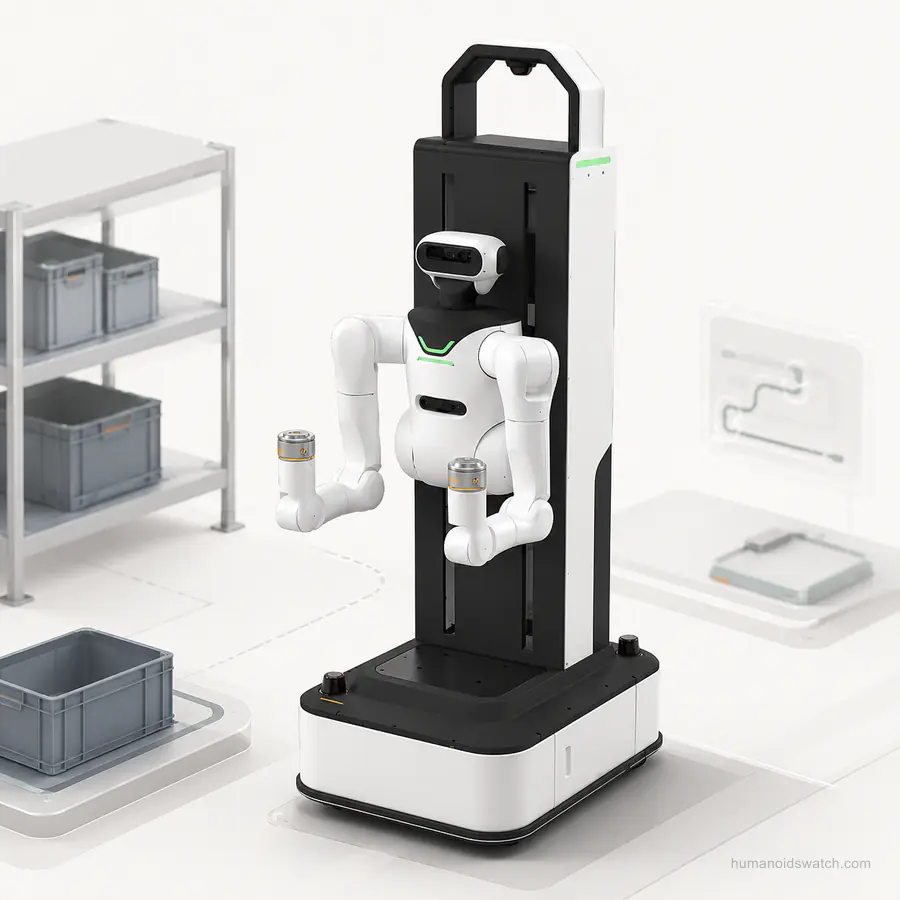
JAKA Kargo is a wheeled humanoid from JAKA Robotics, combining dual 7-axis arms with an omnidirectional mobile base for factory sorting and handling. JAKA extends its collaborative robot background into humanoids, targeting structured indoor workflows. Named deployments are not publicly disclosed, and procurement clarity remains limited.
Evidence signal
Deployments
0 linked deployments
No published deployments are linked to this robot yet.
Profile basics
Specifications
- Robot type
- Wheeled humanoid
- Height
- 1.75 m
- Weight
- 250 kg
- Payload
- 5 kg
- Speed
- n/a
- Runtime
- n/a
- Locomotion
- Wheeled
- Manipulation
- Two arms, end effectors not disclosed
- Degrees of freedom
- 22 DoF
- Autonomy / control
- Semi-autonomous / assisted autonomy
Profile context
Description
JAKA Kargo represents JAKA Robotics' entry into the humanoid robots market, building on the company's established position in collaborative robot arms. Unlike bipedal humanoids, the Kargo adopts a wheeled mobile manipulator form factor — a deliberate choice that prioritizes stability and payload reliability in factory settings. The platform pairs a differential-drive chassis with dual 7-axis arms, totaling 22 degrees of freedom, and carries a 5 kg payload per arm. JAKA has publicly shown the Kargo at industry events including CIIF 2025, where the robot was presented as part of the company's embodied intelligence product family. The design emphasizes structured indoor operation with multi-modal perception for sorting and handling tasks. While the technical positioning is clearly articulated, public information about production volumes, commercial availability, and operating track record outside vendor-controlled settings remains thin.
Public deployment evidence for JAKA Kargo remains limited. The robot has been shown at trade exhibitions and featured in vendor promotional materials, and media reports reference deployment at a Fortune 500 factory for sorting and handling tasks using multi-modal perception. However, the specific customer, deployment scale, operating hours, and performance data are not publicly confirmed. The current public record is stronger on technical positioning and demonstration capability than on independently verifiable field deployments. JAKA's broader track record in industrial collaborative robots provides some credibility, but that experience does not directly translate into proven humanoid robot deployments. Buyers should distinguish between the vendor's established robot arm business and the still-emerging mobile manipulation platform. Assessment of deployment readiness depends on whether JAKA can provide prospective buyers with references, uptime data, and evidence of repeatable operation beyond controlled demonstrations.
JAKA Kargo appears best suited for structured indoor logistics and light manufacturing where wheeled mobility is acceptable and task variety justifies dual-arm manipulation. The 5 kg per-arm payload and wheeled base make it more relevant for sorting, kitting, machine tending, and parts transfer than for heavy lifting or outdoor operation. Buyers already using JAKA collaborative arms may find integration familiarity advantageous, though the mobile platform introduces navigation, safety, and fleet management considerations. The absence of public pricing complicates procurement assessment — buyers should evaluate total cost including integration, end-effector tooling, and ongoing maintenance. Fit is likely strongest in operations running structured, repeatable workflows where floor conditions support wheeled platforms. Prospective adopters should request pilot data, reliability metrics, and references before treating the Kargo as deployment-ready.