Weave Robotics, Inc.
Isaac 0
Analyst summary
At a glance
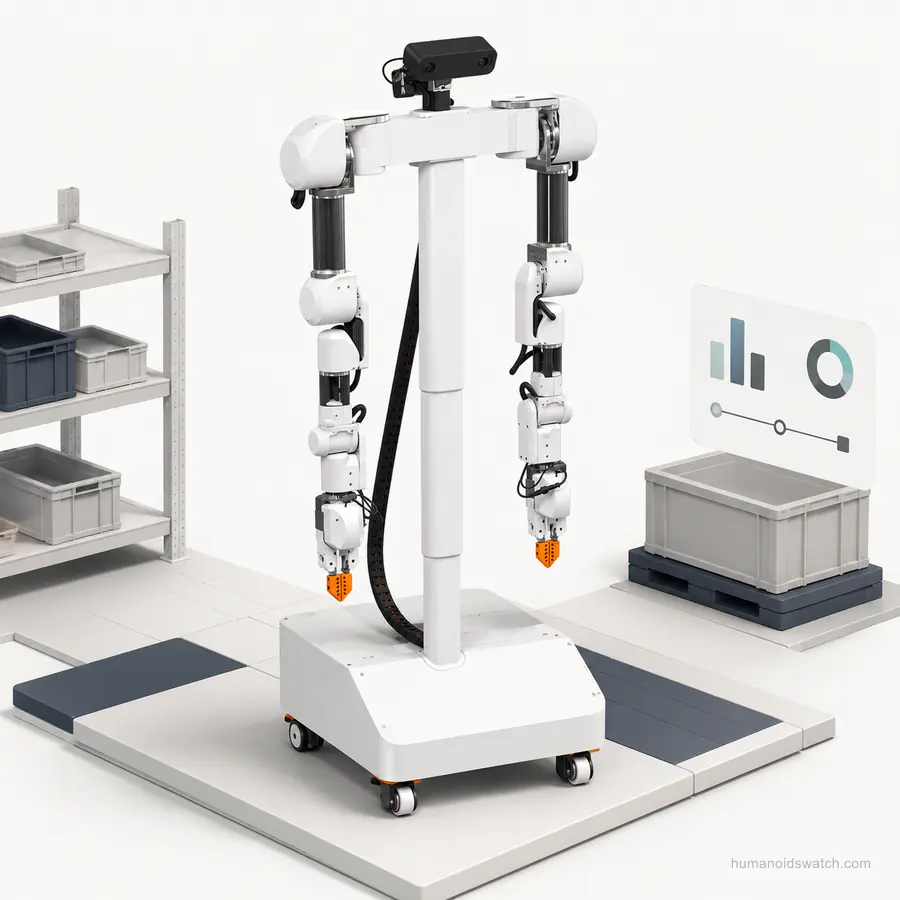
Isaac 0 is a stationary humanoid torso from Weave Robotics, Inc., positioned as a consumer laundry-folding appliance. It blends semi-autonomous operation with teleoperation and sells through direct purchase or subscription. Early shipments have begun in California, but field deployment scale is limited and named customers are not disclosed.
Evidence signal
Deployments
0 linked deployments
No published deployments are linked to this robot yet.
Profile basics
Specifications
- Robot type
- Stationary humanoid torso
- Height
- 0.76 m–1.70 m
- Weight
- n/a
- Payload
- n/a
- Speed
- n/a
- Runtime
- n/a
- Locomotion
- Stationary
- Manipulation
- Two arms with hands
- Degrees of freedom
- 17 DoF
- Autonomy / control
- Teleoperated
Profile context
Description
Isaac 0 represents an unusual entry in the humanoid robots market: a stationary humanoid torso purpose-built for a single domestic task rather than general-purpose industrial manipulation. Developed by California-based Weave Robotics, Inc., the robot uses dual arms with two-finger hands and a total of 17 degrees of freedom to fold laundry items placed on an adjoining table. Its autonomy posture is a blend of onboard capability and remote teleoperation, with the vendor stating the system learns from operator corrections over time. Among humanoids, Isaac 0 stands apart for its home-first positioning at a time when most humanoid robot development remains focused on logistics, manufacturing, and warehouse use cases. The vendor describes it as its first product and has begun limited shipments to California residents, with broader availability and future products announced as longer-term goals.
Weave Robotics states that Isaac 0 shipments have started for California residents, with an estimated delivery timeline of four to six weeks and limited quantities available. This represents a rare instance of a humanoid-form robot reaching end-consumer hands rather than remaining in lab demonstrations or industrial pilots. However, public deployment evidence is constrained: no named residential customers have been disclosed, no independent third-party reviews or operating data have been published, and the total number of units shipped is not publicly known. The vendor frames Isaac 0 as a first-generation home product with an upgrade pathway to future releases, which suggests the current deployment is closer to an early-adopter program than a scaled commercial rollout. Buyers should assess whether the robot has moved beyond controlled vendor-supported installations into repeatable, independently verified home operation.
Isaac 0 may be most relevant for early-adopter households willing to accommodate a dedicated stationary robot that occupies roughly two square feet of floor space alongside a recommended 48-by-30-inch work table. Its single-use focus on laundry folding limits versatility but simplifies the operational envelope: the stationary base removes locomotion risk, and the task is well-defined. The $7,999 up-front price or $450 monthly subscription places it in the premium appliance category rather than the industrial capital equipment range typical of other humanoid robots. Practical assessment depends on installation requirements, ongoing teleoperation dependency, maintenance terms beyond the included warranty, and how reliably the system handles varied laundry loads in real home environments. Buyers evaluating domestic robots should weigh single-task specialization against general-purpose alternatives that remain in earlier stages of market readiness.