Fourier Intelligence
GR-3
Analyst summary
At a glance
GR-3 is a full-size care-focused humanoid robot from Fourier Intelligence, the latest entry in the company's GRx humanoid series. Marketed as a "Care-bot," it is positioned for social companionship and assistive care roles. Public information is dominated by a vendor product unveiling; independent deployment evidence has not yet emerged.
Evidence signal
Deployments
0 linked deployments
No published deployments are linked to this robot yet.
Profile basics
Specifications
- Robot type
- Semi-humanoid service robot
- Height
- 1.65 m
- Weight
- 71 kg
- Payload
- n/a
- Speed
- n/a
- Runtime
- 3 h
- Locomotion
- Bipedal
- Manipulation
- Two arms, end effectors not disclosed
- Degrees of freedom
- 55 DoF
- Autonomy / control
- n/a
Profile context
Description
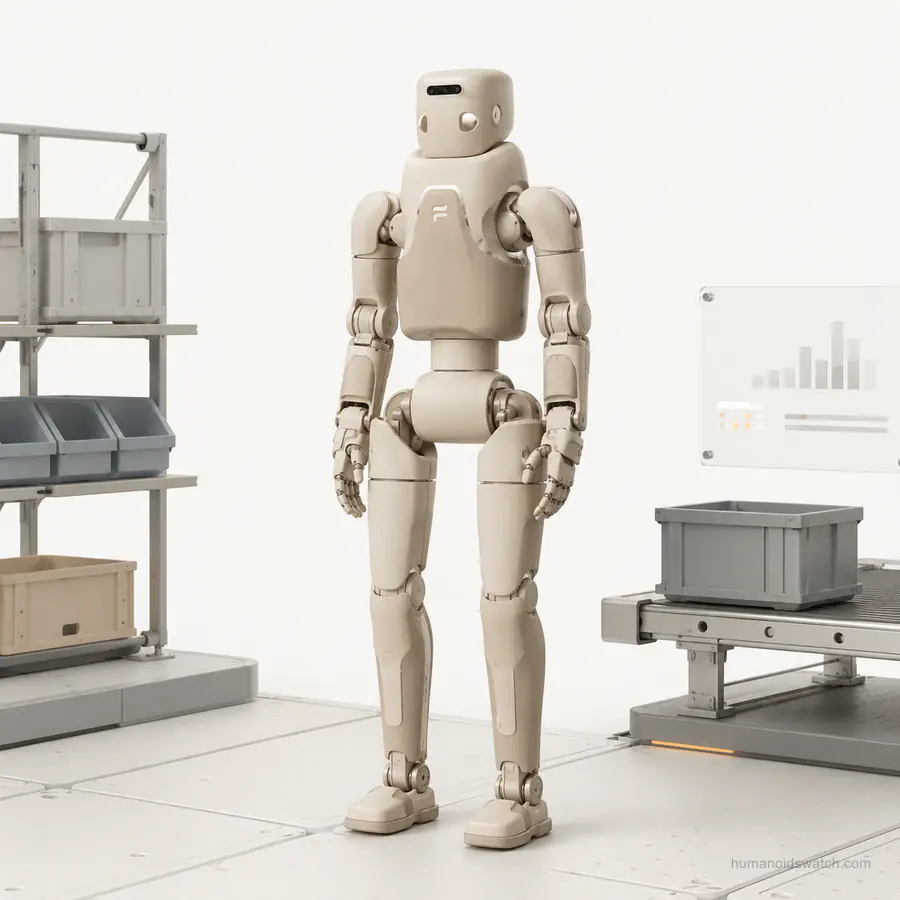
Fourier Intelligence positions the GR-3 as its first full-size care-centric humanoid robot, expanding the GRx series beyond earlier semi-humanoid concepts. The robot stands 165 cm tall and weighs 71 kg, with up to 55 degrees of freedom and a bipedal locomotion platform. Its public identity is defined by a soft-touch industrial design, an expressive animated facial interface, and a multimodal perception system that integrates vision, audio, and tactile feedback for emotionally responsive interaction. Twelve-degree-of-freedom hands and Fourier's proprietary actuators support a range of manipulation and navigation tasks. The GR-3 reflects a distinct positioning choice within the broader humanoid robots market: rather than targeting industrial throughput or warehouse logistics, Fourier is advancing a companion-and-care narrative that differentiates it from most bipedal humanoids currently being developed by competitors.
Public deployment evidence for the GR-3 remains very limited. Fourier unveiled the robot through a press release and has positioned it as a platform for public services, academic research, and — eventually — personal and clinical care settings. No named customer deployments, confirmed pilots, or announced production contracts appear in the public record as of mid-2026. The robot's public story is strongest at the product-announcement and demonstration level; the vendor describes developer-facing APIs and a client-server architecture, suggesting a pre-commercial platform phase rather than an operational deployment stage. Buyer assessment should distinguish between a considered design for human-facing environments and the absence of field-proven operating evidence. Until independent pilot results or buyer adoption data surface, the GR-3 remains closer to an advanced prototype launch than a deployable fleet offering.
The GR-3 may be most relevant for organizations exploring humanoid robots in people-facing roles — public reception, academic human-robot interaction research, healthcare prototyping, or senior-care concept evaluations. Its soft design, social interaction features, and multimodal emotional processing suggest a stronger fit for environments where user comfort and perceived approachability matter more than industrial throughput. Practical assessment depends on several unresolved factors: runtime is stated at three hours, pricing at an estimated $27,500 (third-party estimate, China-focused), and payload and speed specifications are not publicly disclosed. Integration burden is unclear beyond Fourier's stated developer API plans. Buyers should evaluate whether the announced feature set aligns with operational requirements and whether the robot has progressed beyond the unveiling stage. For industrial or high-throughput humanoid applications, more established platforms with stronger deployment records may offer clearer procurement paths.