Unitree Robotics
G1
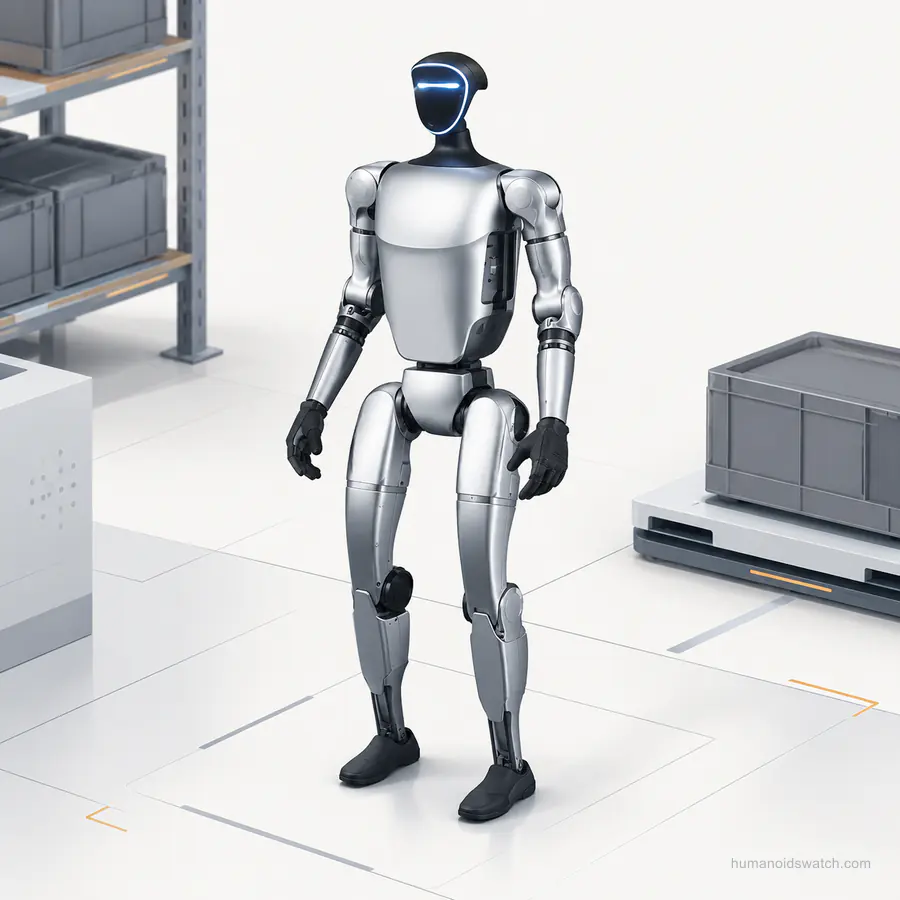
Analyst summary
At a glance
The G1 is a compact full-size bipedal humanoid robot from Unitree Robotics, positioned as a lower-cost development platform. Vendor pricing around $13,500 USD places it among the most aggressively priced full-size humanoids on the market. Deployment evidence beyond vendor demos and developer units remains limited.
Evidence signal
Deployments
0 linked deployments
No published deployments are linked to this robot yet.
Profile basics
Specifications
- Robot type
- Full-size bipedal humanoid
- Height
- 1.32 m
- Weight
- 35 kg
- Payload
- 2 kg
- Speed
- n/a
- Runtime
- n/a
- Locomotion
- Bipedal
- Manipulation
- Two arms with hands
- Degrees of freedom
- 23 DoF
- Autonomy / control
- Autonomous navigation
Profile context
Description
The Unitree G1 is a 1.32-meter, 35-kilogram bipedal humanoid robot with 23 degrees of freedom and autonomous navigation capability. Unitree Robotics, known primarily for its quadruped robots, entered the humanoid space with the G1 as an intentionally compact and cost-accessible platform. Its two-arm manipulation design and onboard perception support basic pick-and-place and navigation tasks. The G1 sits within a growing category of sub-$20,000 humanoid robots that aim to broaden access to bipedal platforms beyond well-funded labs. Public technical detail from Unitree highlights the robot's lightweight construction and lower-body mobility, though independent validation of its real-world reliability and task endurance remains thin. The broader humanoid robots market has seen multiple vendors pursue similar entry-level pricing strategies, making comparative buyer evaluation important.
Public deployment evidence for the Unitree G1 remains limited. Most publicly visible activity consists of vendor-produced demonstration videos showing walking, stair climbing, and light object handling in controlled settings. Unitree has made the G1 available for purchase through its official store, which signals commercial intent, but named customer deployments are not clearly disclosed. There is no confirmed public record of the G1 operating in production industrial environments, third-party logistics facilities, or sustained field trials. The current visibility places the G1 closer to a pre-commercial developer platform than a deployment-ready industrial humanoid. Buyers and automation teams considering the G1 should distinguish between vendor purchase availability and evidence of repeatable, unsupervised operation in real buyer environments. Procurement decisions should weigh the gap between technical capability shown in demos and operating maturity proven through field deployment.
The G1 may be most relevant for research labs, academic institutions, and early-stage automation teams evaluating humanoid form factors at a lower capital threshold. Its compact height of 1.32 meters and light 35-kilogram weight make it better suited to environments designed around human-scale interaction than heavy industrial settings. The vendor-stated 2-kilogram payload limits its applicability for material handling tasks that require heavier lifts, and the absence of published runtime data constrains practical duty-cycle planning. Buyers should evaluate whether the G1's autonomous navigation and 23-DoF manipulation meet specific task requirements, particularly for light pick-and-place, inspection, or human-robot interaction research. Practical assessment also depends on software integration burden and whether Unitree provides adequate developer tooling and support. Fit is likely strongest where budget constraints and R&D flexibility outweigh the need for proven industrial deployment.