Noetix Robotics
Dora
Analyst summary
At a glance
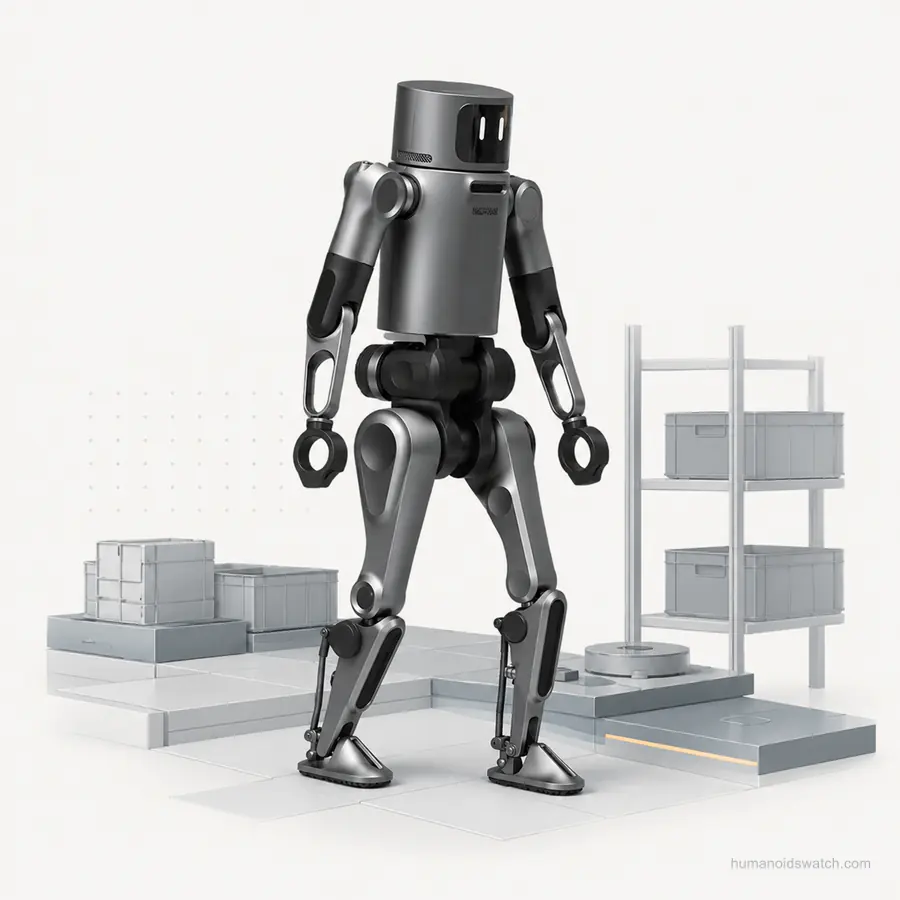
Dora is a compact humanoid robot from Noetix Robotics, positioned for education, research, and home assistance. At 1 meter tall and 20 kg, it sits among the market's smaller humanoids and debuted as the company's first public robot at WAIC 2024. Public information indicates Dora is a pre-commercial platform with no confirmed customer deployments.
Evidence signal
Deployments
0 linked deployments
No published deployments are linked to this robot yet.
Profile basics
Specifications
- Robot type
- Full-size bipedal humanoid
- Height
- 1.00 m
- Weight
- 20 kg
- Payload
- 5 kg
- Speed
- 1.0 m/s
- Runtime
- n/a
- Locomotion
- Bipedal
- Manipulation
- Two arms with hands
- Degrees of freedom
- 20–26 DoF
- Autonomy / control
- Developer-programmable / onboard AI stack
Profile context
Description
Dora is Noetix Robotics' entry-level humanoid robot, first shown at the 2024 World Artificial Intelligence Conference in Shanghai. With a height of roughly 1 meter and a weight of 20 kg, it occupies the lightweight, shorter-form-factor segment of the humanoid robots market — a category that has grown rapidly as developers and educators seek more affordable platforms. Dora carries three depth cameras for environmental perception and runs an NVIDIA Jetson Orin edge-AI module, enabling onboard processing for object recognition and interaction tasks. Its onboard LLM-based speech and visual interaction stack, combined with a 7-inch screen and microphone array, positions it as a socially interactive humanoid rather than a purely industrial machine. Compared to Noetix's athletic N2 or its larger E1, Dora emphasizes approachability and multi-modal communication over high-speed dynamic movement.
Public deployment evidence for Dora remains limited. The robot was demonstrated at WAIC 2024 and has been referenced in media coverage alongside Noetix Robotics' other humanoids, but there are no clearly disclosed named customer deployments, confirmed pilot programs, or commercial rollouts. The company's visible momentum — including substantial Series B financing in early 2026 and reported orders for its Bumi model — signals an active R&D pipeline for its broader family of robots, but Dora itself has not been the focus of volume announcements. Buyers should treat Dora as a pre-commercial demonstration platform. The gap between a public showcase and repeatable field deployment is meaningful, and Dora's maturity in that regard remains unverified in the public record.
Dora's form factor and interaction capabilities make it most relevant for education, university robotics labs, STEM outreach, and consumer-facing brand demonstration environments. Its 1-meter height, 5 kg payload, and 1 m/s walking speed are modest by industrial humanoid standards, limiting it to light-duty tasks in controlled settings. The three depth cameras and edge-AI stack support perception research and human-robot interaction studies, while the onboard voice and display interface lowers the barrier for non-technical users. Practical assessment depends on whether the intended use case is developer experimentation or a production task requiring sustained autonomous operation.