Agility Robotics
Digit
Analyst summary
At a glance
Digit is a bipedal humanoid robot from Agility Robotics, built for logistics and warehouse material handling. Digit targets tote-moving workflows in brownfield facilities, using two legs and purpose-built end effectors. Early pilot activity with logistics operators has been publicly shown, while scaled commercial deployment remains unconfirmed.
Evidence signal
Deployments
1 linked deployments
GXO / SPANX
Warehouse Tote Handling
Profile basics
Specifications
- Robot type
- Biped humanoid
- Height
- n/a
- Weight
- n/a
- Payload
- n/a
- Speed
- n/a
- Runtime
- n/a
- Locomotion
- Biped locomotion
- Manipulation
- Two-arm manipulation
- Degrees of freedom
- n/a
- Autonomy / control
- Task-focused autonomy with deployment orchestration
Profile context
Description
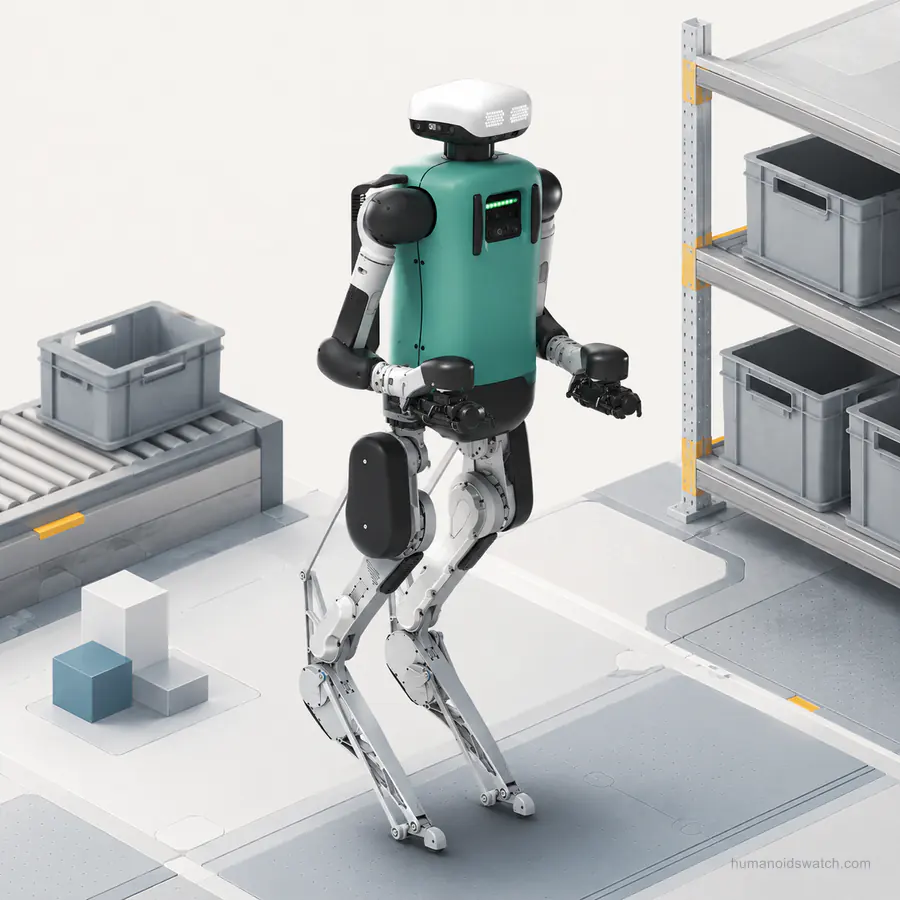
Digit by Agility Robotics is a bipedal humanoid robot engineered for logistics and warehouse workflows rather than general-purpose humanoid applications. It stands on two bird-like legs and carries a torso-mounted perception system with a two-arm upper body designed for tote handling. Agility Robotics positions Digit as a practical addition to existing brownfield warehouse environments, walking into standard workstations without requiring facility modifications. The robot is part of a small but growing class of purpose-built logistics humanoids, distinct from the broader humanoid robots market in that its design is tightly scoped to material handling rather than aiming for broad autonomous task execution. Public capabilities include walking between workstations, picking and placing totes, and basic navigation in structured indoor spaces.
Digit has one of the more visible deployment stories among current logistics humanoids, though public deployment evidence remains at early pilot stage. Agility Robotics has disclosed pilot activity with logistics operators and has publicly shown Digit moving totes in controlled warehouse test environments. A production facility in Oregon supports the company's manufacturing claims, but named customer-scale deployments with independently verifiable operating hours, throughput metrics, or multi-site rollouts are not clearly disclosed. Buyer assessment should distinguish between vendor-published demonstration footage and independently confirmed sustained field operation. The robot's deployment maturity appears stronger than concept-stage competitors but still falls short of the repeatable commercial deployment evidence that automation buyers typically require for procurement decisions.
Digit may be most relevant for logistics and warehouse operators running standard tote-based workflows who want a humanoid robot that fits existing brownfield infrastructure without conveyor or structural modifications. Its bipedal form factor allows it to walk to standard pick-and-place stations, while purpose-built end effectors target tote lifting and carrying. Practical assessment depends on whether Digit can match the throughput consistency of fixed automation while delivering the flexibility of a walking machine. Fit is likely strongest in mid-volume distribution centers where automation flexibility matters more than peak speed.