Wandercraft
Calvin-40
Analyst summary
At a glance
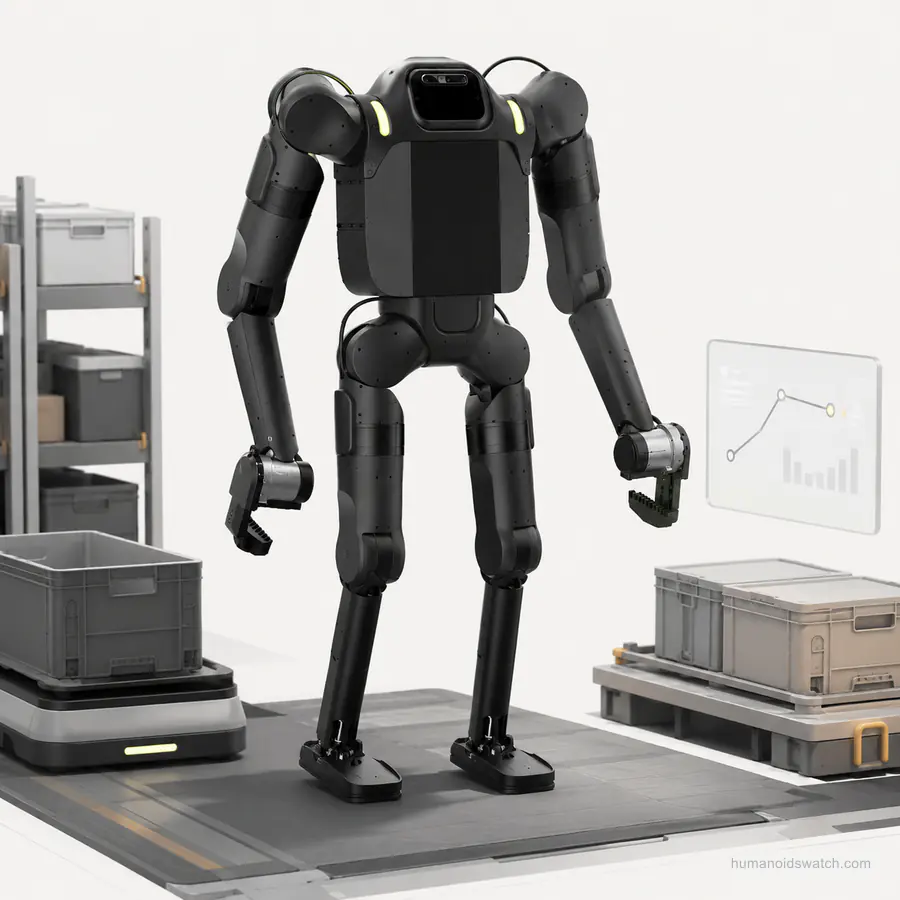
Calvin-40 is a full-size bipedal humanoid robot from Wandercraft, positioned for heavy-load industrial tasks and assembly-line production. It is designed for 8 to 22 hours of continuous operation with a 40 kg payload capacity and autonomous navigation. Wandercraft has announced an industrialization partnership with Renault.
Evidence signal
Deployments
0 linked deployments
No published deployments are linked to this robot yet.
Profile basics
Specifications
- Robot type
- Full-size bipedal humanoid
- Height
- n/a
- Weight
- n/a
- Payload
- 40 kg
- Speed
- n/a
- Runtime
- 8–22 h
- Locomotion
- Bipedal
- Manipulation
- Two arms with grippers
- Degrees of freedom
- n/a
- Autonomy / control
- Autonomous navigation
Profile context
Description
Calvin-40 is Wandercraft's entry into the industrial humanoid robots market, marking the French company's expansion beyond its established medical exoskeleton platform. The robot is a full-size bipedal humanoid with two arms and grippers, built around high-torque motors and a full-body control algorithm that adapts to varying loads. Wandercraft emphasizes a Europe-secured supply chain and draws on a decade of experience in certifiable safety systems from its medical device heritage. The robot uses 3D sensing and a reinforcement-learned vision stack for autonomous navigation in industrial environments. Compared to other humanoids targeting logistics and light assembly, Calvin-40 is positioned specifically for heavy payload handling, with a stated 40 kg lifting capacity and an operational runtime that spans a full shift or more.
Public deployment evidence for Calvin-40 centers on Wandercraft's stated claims of European production deployment and an industrialization partnership with Renault. The vendor reports that three of twelve generic industrial use cases are already being deployed, and that the robot is the first humanoid deployed in Europe for assembly-line production tasks. However, named customer deployments, specific production sites, and independently verifiable field-operating data have not been publicly disclosed. The Renault partnership signals manufacturing-scale intent but has not yet translated into publicly documented multi-site rollouts. Buyers assessing Calvin-40 should treat current deployment claims as early-stage production integration rather than established commercial rollout, and should request direct operating evidence as part of procurement due diligence.
Calvin-40 may be most relevant for buyers in heavy manufacturing and logistics where humanoid robots need to handle substantial payloads — up to 40 kg — over extended shifts. The robot's bipedal form factor and autonomous navigation make it a candidate for brownfield facilities where fixed automation is impractical and tasks require mobility across varied floor layouts. Runtime flexibility from 8 to 22 hours supports both single-shift and near-continuous operation patterns. The certifiable safety system, rooted in Wandercraft's medical exoskeleton experience, could reduce integration friction in European facilities with strict safety requirements.