Apptronik
Apollo
Analyst summary
At a glance
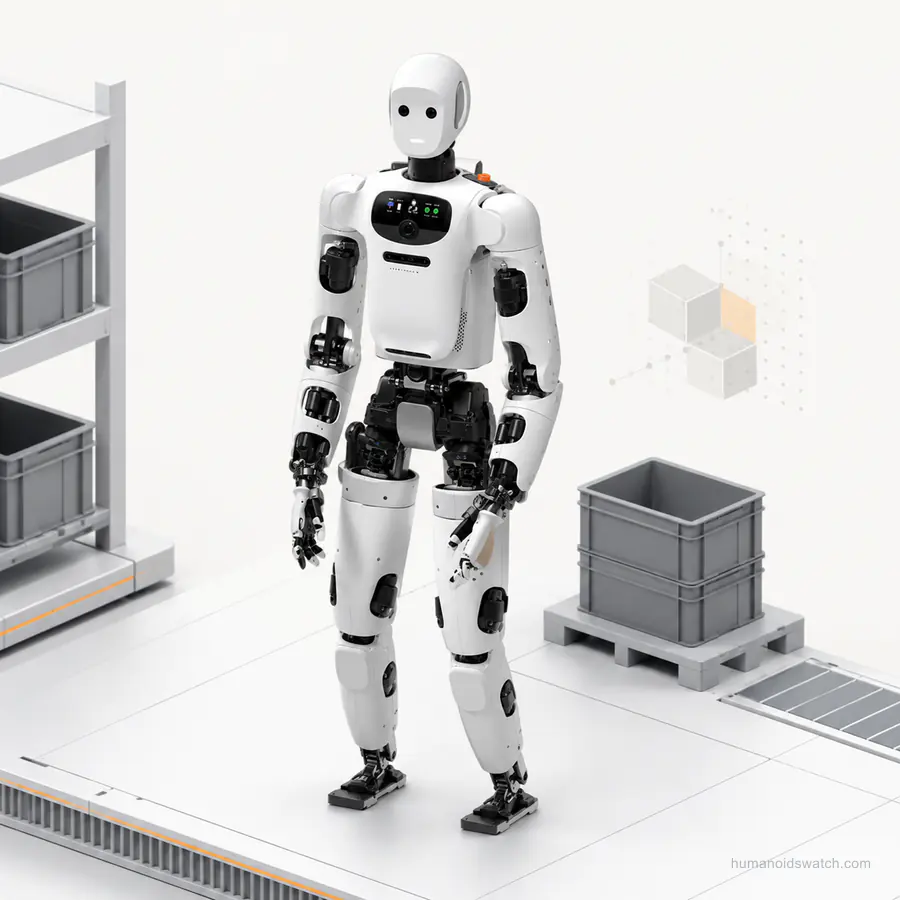
Apollo is a general-purpose humanoid robot from Apptronik, built for logistics and light manufacturing. The bipedal platform emphasizes payload handling, safe human interaction, and hot-swappable batteries. Deployment evidence is limited to demonstrations and early engagements, with no commercial rollouts publicly confirmed.
Evidence signal
Deployments
1 linked deployments
Mercedes-Benz
Line-Side Material Movement
Profile basics
Specifications
- Robot type
- Biped humanoid
- Height
- 5 ft 8 in
- Weight
- 160 lb
- Payload
- 55 lb
- Speed
- n/a
- Runtime
- 4 hours per battery pack
- Locomotion
- Biped or modular mobility configuration
- Manipulation
- Two-arm manipulation
- Degrees of freedom
- n/a
- Autonomy / control
- Industrial task assistance
Profile context
Description
Apollo is a full-size humanoid robot developed by Apptronik, an Austin-based robotics company with a background in exoskeleton and actuator design for NASA and other partners. The robot is positioned as a general-purpose bipedal platform aimed at industrial environments — primarily logistics, material handling, and light assembly. It features an interchangeable battery system that allows uptime-focused operation without prolonged charging downtime. Apptronik presents Apollo as a human-scale robot that can operate safely alongside people in brownfield facilities without major infrastructure changes. While Apptronik has disclosed partnerships and publicly demonstrated Apollo walking and performing basic manipulation, the commercial availability of Apollo remains early-stage, and public deployment evidence is still limited. Within the broader market of humanoid robots, Apollo competes with other industrially positioned bipeds that are similarly in pre-commercial or pilot phases.
Apptronik has shown Apollo in controlled demonstrations and disclosed a manufacturing line partnership concept with Mercedes-Benz, but named customer deployments are not clearly confirmed in the public record. The robot has been presented in pilot-style configurations, and the vendor has indicated intent to deploy units for logistics tasks. However, independent evidence of production-scale commercial rollout, long-term field operation, or measurable throughput in real customer environments remains thin. For buyers, Apollo's deployment maturity should be assessed as pre-commercial: a platform with visible technical capability and growing partner interest, but not yet a proven operating asset. As with many humanoids in this category, procurement decisions should distinguish between structured demonstration environments and the operational demands of live logistics or manufacturing workflows.
Apollo may be most relevant for buyers in logistics, warehousing, and light manufacturing who are exploring humanoid robot integration for repetitive material-handling workflows. Its bipedal form factor, human-scale reach, and swappable battery design suggest suitability for brownfield sites where wheeled automation or fixed infrastructure is impractical. Buyers should evaluate whether Apollo's payload capacity and runtime align with their specific throughput requirements, and whether the integration burden — particularly around safety certification, fleet management, and task programming — is acceptable for their automation roadmap. As with most pre-commercial humanoids, the practical fit depends heavily on the gap between lab performance and sustained industrial operation.