Naver Labs
Ambidex
Analyst summary
At a glance
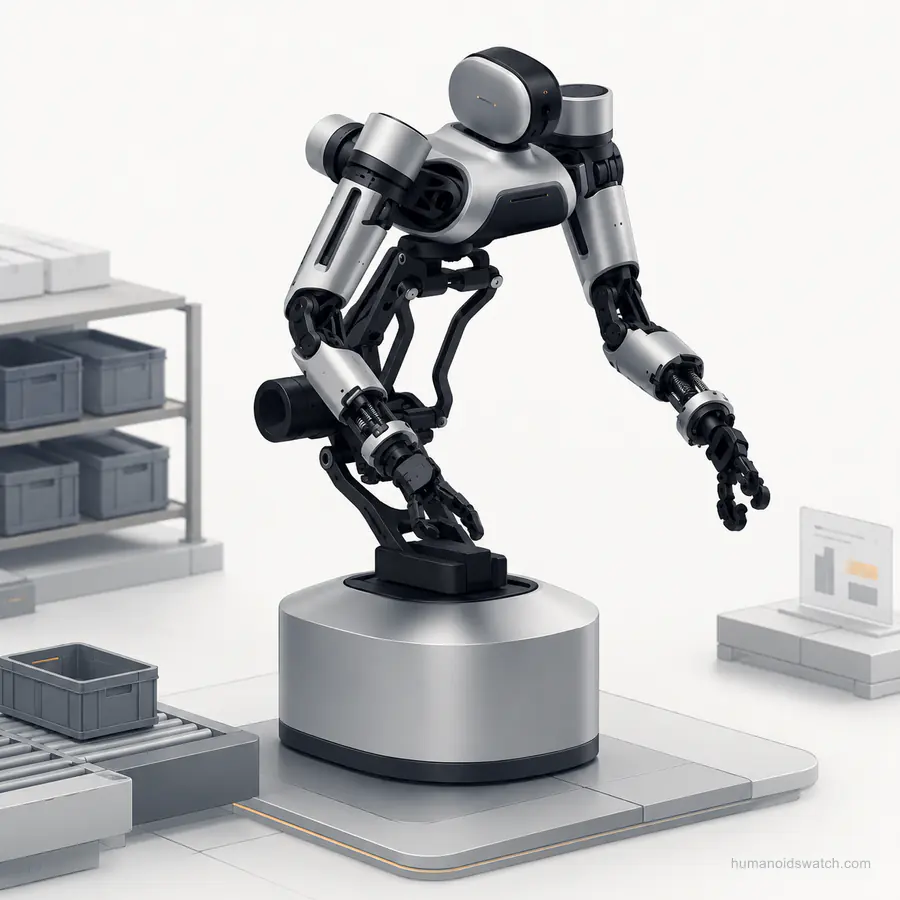
Ambidex is a dual-arm humanoid-style manipulator from Naver Labs, built for safe human-robot interaction research. Its cable-driven actuation design separates motors from joints, yielding lightweight compliant arms with 14 degrees of freedom. Ambidex remains a pre-commercial R&D platform; no customer deployments have been disclosed.
Evidence signal
Deployments
0 linked deployments
No published deployments are linked to this robot yet.
Profile basics
Specifications
- Robot type
- Humanoid mobile manipulator
- Height
- n/a
- Weight
- n/a
- Payload
- n/a
- Speed
- n/a
- Runtime
- n/a
- Locomotion
- n/a
- Manipulation
- Two arms, end effectors not disclosed
- Degrees of freedom
- 14 DoF
- Autonomy / control
- n/a
Profile context
Description
Developed by South Korea's Naver Labs, Ambidex is an upper-body humanoid manipulator designed around a cable-driven actuation principle that separates motors from joints, keeping the arms lightweight and inherently compliant. With seven degrees of freedom per arm and a stationary or wall-mounted base, Ambidex is not a full-body humanoid robot but occupies a niche between industrial cobots and humanoid-style upper-torso platforms. The system reflects Naver Labs' broader robotics research agenda, which has emphasized safe human-robot collaboration in service-oriented environments. In the wider humanoids landscape, Ambidex represents an alternative approach to dual-arm manipulation that prioritizes mechanical safety and backdrivability over high-payload industrial throughput.
The public deployment record for Ambidex is limited. Naver Labs has presented the platform at technology events and in research publications, demonstrating compliant dual-arm manipulation in controlled settings, but named customer deployments, pilot programs, or commercial rollouts have not been disclosed. The robot's cable-driven design and lab-focused demonstrations suggest it has been developed primarily as an internal research asset rather than a field-deployable product. In a market where several humanoid robot vendors are now reporting early-stage pilot engagements, Ambidex sits at an earlier point on the buyer-visible maturity curve. Buyers evaluating dual-arm manipulators or upper-body humanoids should weigh the absence of field deployment evidence against the platform's distinctive safety-oriented design approach.
Ambidex may be most relevant for research institutions, service-robot developers, and automation teams exploring safe human-robot manipulation where lightweight compliant arms offer advantages over rigid industrial robots. The cable-driven architecture reduces arm inertia, which could make the platform suitable for tasks involving close-proximity human interaction, small-object handling, or assistive applications in settings such as cafés, retail, or care environments where Naver Labs has previously explored service robotics. Buyers should evaluate whether a stationary dual-arm manipulator aligns with their workflow requirements, as Ambidex lacks mobility and does not address locomotion-dependent tasks.