AgiBot
AGIBOT X2
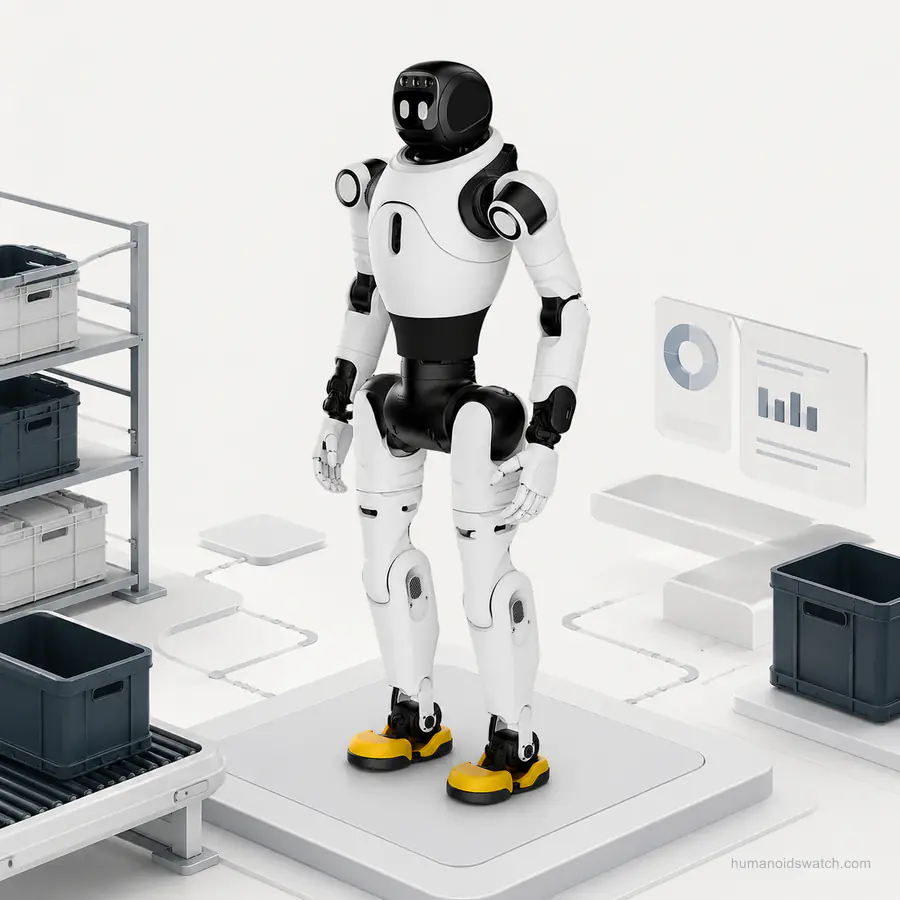
Analyst summary
At a glance
The AGIBOT X2 is a compact full-size bipedal humanoid robot from AgiBot, positioned as an accessible research and light-service platform. At 1. 31 m and 35 kg, it targets education, HRI research, and light indoor tasks rather than heavy industrial work.
Evidence signal
Deployments
0 linked deployments
No published deployments are linked to this robot yet.
Profile basics
Specifications
- Robot type
- Full-size bipedal humanoid
- Height
- 1.31 m
- Weight
- 35 kg
- Payload
- 1 kg
- Speed
- Up to 1.8 m/s
- Runtime
- 2 h
- Locomotion
- Bipedal
- Manipulation
- Two arms with grippers
- Degrees of freedom
- 25 DoF
- Autonomy / control
- Autonomous navigation
Profile context
Description
The AGIBOT X2 is a small-stature bipedal humanoid developed by AgiBot, the Shanghai-based robotics company also known as Zhiyuan Robotics. Standing at 1.31 m and weighing around 35 kg, the X2 occupies a distinct niche among humanoid robots: it is lighter and more approachable than full-scale industrial humanoids, with a design emphasis on accessibility and safety. The robot features 25 degrees of freedom, autonomous navigation capability, and two arms with grippers for basic manipulation. Unlike AgiBot's larger humanoid platforms, the X2 appears aimed at research institutions, universities, and light commercial settings. Its modest 1 kg payload and approximately two-hour runtime at walking speed confirm it is not a heavy-lift industrial workhorse, but rather a development and experimentation platform within the growing humanoid robot market.
Public deployment evidence for the AGIBOT X2 remains limited and primarily centered on vendor demonstrations and research-oriented use. AgiBot has shown the X2 in controlled environments and published performance specifications, but named customer deployments, commercial contracts, or production-scale rollouts are not clearly documented in public sources. The robot is listed for purchase on AgiBot's official store, which suggests some degree of procurement availability, yet buyer-available deployment evidence beyond R&D and educational contexts has not been confirmed. This positioning is consistent with many current humanoid robot platforms that are publicly visible through demos and specifications but have not yet accumulated extensive field operating records. Buyers assessing the X2 should distinguish between technical capability advertised by the vendor and independent evidence of sustained operational use.
The AGIBOT X2 may be most relevant for academic robotics labs, human-robot interaction research, and light indoor service prototyping. Its compact size, light weight, and approachable design make it better suited to environments where safety and human proximity are priorities rather than demanding industrial tasks. The 1 kg payload and two-hour runtime limit its applicability in logistics or manufacturing settings that require sustained heavy manipulation. Buyers should evaluate the X2 against its reference specifications and consider whether the robot's public maturity aligns with their operational requirements. The listed price point places it below many full-scale industrial humanoid robots, potentially lowering the barrier for research procurement, but practical assessment depends on integration effort, software ecosystem maturity, and the gap between vendor-claimed capabilities and reproducible field performance.